Story of Shih Ming-Teh, Taiwan Opposition Leader Part 3

Nori (Shih Ming-Teh) Story
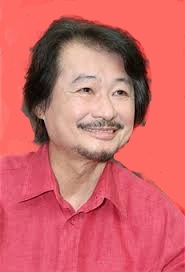

Shih Ming Teh
Shy looks but powerful in act

Masters of our own fate
Meanwhile on the mainland,Mao Zedong,driven by the rubric and revolution of Marx,came out of his historical Long March and led a ruthless onslaught on Chiang’s troops, taking city after village.Humiliated and emaciated,the Kuomintang army fled to Taiwan in 1949. Chiang Kai-shek declared that the island would be used as a base from which to launch the recovery of China from the communist. What was left unsaid was that Taiwan was not home to the Kuomintang. As far as Chiang and his army were concerned, it was nothing more than a military base, a political outpost.This callousness was to have far-reaching consequences for the later development of the Beautiful Island.
When the Communist Party took over China, Chiang Kai-shek knew that the war was well and trully lost. To save himself from complete loss of face, the leader of Kuomintang relinquished his post of President of the Republicof China as proclaimed by Dr Sun Yat-Sen when he overthrew the Qing Dynasty in 1911.
Ever the impresario of modern Chinese politics, Chiang left the lame duck presidency to his deputy Li Chung-ren while he quietly staged a massive haul of national treasures from the motherland. A total of 151 crates of gold,silver and cash from the central bank were shipped off to Taiwan.Chiang was also prescient enough to take pricelessrelics and museum treasures along with him. President Li Chung-ren,assailed by thoughsof being dragged from pillar to post by the communists,had in the meantime resigned the presidency and escaped to the United States.

Once in Taiwan,Chiang’s appointed National Assembly, according to script,pleaded with the Generalissimo to resume the presidency of China. The stage was set for the former President to take control again. In 1949 he declared Taipei to be the temporary capital of all China and vowed that the Kuomintang would one day ‘make a glorious return to the mainland’.
The 2-2-8 Incident had lit the flame of independence in the hearts ofagroup of young Taiwanese whom Shih was to later lead–a flame that burned unstoppably in the decades that followed.More than anything else,Shih wanted the Taiwanese people to be able to defend themselves against foreign powers.Resisting the mainland rulers would be an arduous task.But for every journey af a thousand miles,someone had to nurse the anxious hope that someone else would take that first fearless step.

Shih was a thin,timid man who never looked like a leader of his people. With a stick of a body,he was not disposed to grandiloquent displays of wit and oratory.His preferred method of leadership was to work in the background and influence his contemporaries with quiet diligence.
He quickly developed a zest for philosophy, politics and law, and participated in discussion groups organised by students. Wherever these groups gathered together,there would also be talk about social issues, with poverty and discrimination against the locals being the leitmotif. The meetings were conducted in different places,including the Shih’s family run hotel.

Shih was determined tolead inspite of himself.Firstly,he had to overcome his aversions to everything from public speaking to darkness,which triggered phobic reactions. With a single=mindedness that proved to be his greatest source of strength in his struggle

Previous,part 2

Story of Shih Ming-Teh, Taiwan Opposition Leader Part 2

About Shih Ming-Teh.


Shih Ming Teh was born on 15 January 1941 into a wealthy family in Kaohsiung, a city in southern Taiwan.His father,Shih Kuo-tsuei, a practitioner of traditional Chinese medicine as well as a believer in the Roman Catholic faith,was rather successful in his medical practise which very quickly translated into several pieces of ral estate. His wife had given birth to three sons and five daughters, with the sons all dying when they were still infants.
Notwithstanding his Christian beliefs and in full observance of that most contentious of traditions where boys are preferred, Shih Kuo-tsuei took a young second wife, who bore him another six children,this time all but one of them boys, Shih Ming-teh squeezed in at number four.
The Portuguese had named Taiwan ‘Formosa’, or Beautiful Island,when they first set foot there in the eighteenth century.Long considered an inconsequential island compared to the vastness of the Asian continent,Taiwan lies like loose change falling out of the hip-pocket of motherland China. With a mountain range fo a spine, the island is muscularised with fertile pockets of loam on the coasts.
As early as the Ming Dynasty, peasants from Fujian province on the mainland came across in search of arable land. Since then,generations have settled on the western half of the island, with few traversing the mountain range to the eastern coast. Taiwan was already inhabitated by natives of Polynesian stock,who possessed a darker complexion and altogether distinct culture. For centuries these shandiren, or mountain people as the Taiwanese call them,coexisted peaceably with the early settlers.


Someone in Taipei hit the plunger and the bomb went off on 28 February 1947 with such fury that its effects are still left half a century later. An elderly woman was hawking contraband cigarettes when police officers accosted her and tried to confiscate her goods,whereupon she put up a fight.
The officers, unaccustomed to such effrontery,charged her with resisting arrest,convicted her of the offence and sentenced her to a beating (though not necessary in that order) which they proceeded to administer on the spot. Bystanders came to woman’s aid, and a scuffle developed. Suddenly a shot rang out and before anyone could make sense of the situation, a civilian lay dead.

This event, which came to be known as the 2-2-8 Incident (named after the date on which it occured), triggered widespread protests among the Taiwanese. The disquiet between the locals and their mainland rulers now turned into hatred,and rapidly engulfed the major cities.

Governor Chen Yi cabled the mainland Government for reinforcements for his diminutive garrison. When they arrived, the full force of the military was unleashed on the people.The bloodletting spread mercilessly across the country;by the time situation was brought under control, it was estimated that between 10,000 and 15,000 civilians had been killed.

Martial law was imposed and the army like a hateful headmaster, set out to teach the locals a lesson that they would remember forever. Those convicted of taking part in the uprising, often in dubious legal proceedings, were publicly executed.The grisly show-and-tell became a routine event across the whole country.Before each execution, a gong would be sounded to signal that class was about to begin.
When he was six years old,Shih Ming-teh slipped out of his house to witness one such session.The executioner steppedup to the condemned man, who was kneeling with hands bound behind his back, pointed the rifle to the back of his head and pulled the trigger. Bones and brain littered the pavement. One eyeball flew off and impaled itself on the branch of a tree close to where Shih was standing,staring bitterly at him and permanently scarring his psyche.

His own father was not sparedthe Government’s wrath. Suspected of taking part in the uprising,Shih Kuo-tsuei was imprisoned and subjected to interrogation which maimed him physically and psychologically. He was released a few months later when no evidence was found against him, but never recovered from the trauma and died two years later.
With martial law,political parties were banned as they had been under the Japanese,even more books were deemed ‘undesirable’ and declared illegal, and Mandarin became the official language which, like the Japanese language,was not the mother tongue of the Taiwanese who spoke Taiyu, aprovincial dialect.’When we were in school,we had to wear a big label which read:”Please speak Mandarin.”Those who used Taiyu were fined,” my Taiwanese mother-in-law recalled.
NEXT

Story of Shih Ming-Teh, Taiwan Opposition Leader

Politic People Articles

Nori (Shih Ming-Teh) Story


Shih Ming Teh
Shy looks but powerful in act

The Escape

‘Nori!They’re here to arrest you!’ Linda screamed.
It was just a few hours since he first dozed off at about midnight,after returning home from meeting with his compatriots. He was in a daze, having woken to the choleric ring of the doorbell and the fretful screams of his wife.
He instinctively reached for the telephone to warn the others. The line was dead. He put on his clothes and ran to the living room where Linda was frantically barricading the door with sofas,shelves and just about anything else she could find.
‘Quick! Run!’ she shouted.
Nori was desperately trying to figure out what to do but his thoughts were aggravatingly uncooperative.
The doorbell continued.Linda ran to the back door to see iftheir neighbours could help. Suddenly,the front door shook with an angry pounding.
‘Mr Shih, open the door.’
The pounding continued
‘Who are you?’ Linda cried out
‘We’re from the local police.’
‘I know the local police officer. Don’t lie to me,’Nori replied.
‘I’ve just been posted here yesterday.’ Without waiting for a response, the officer started kicking the door down.
Nori returned to the bedroom and switched off all the lights.
He fumbled his way to the kitchen and went out through the back door. His apartment was on the second storey with a fire escape that led to the flat below, but experience told him that intelligence agents would have already surrounded the ground floor. He found the wall that formed the outer fencing of the block apartments and half-slipped, half-groped his way along the narrow strip of moss-covered concrete which led to the roof of the neighbouring flats. Overhanging branches of a tree reached out to lend a chivalrous hand and Nori grabbed them appreciatively.
At 39 years of age, he surprised himself with his nimbleness and strength, despite the less than graceful trek across the concrete ledge.The military training in his younger days was coming in handy.After a couple of feet, he heard Linda scream. The officers must have broken the door down,he thought. Nori looked back but saw only darkness, He was confident that she would not be harmed as she was an American citizen.

Nori continued crawling until he reached a four storey building.The whole area was dark and he couldn’t see how high he was. He looked up the wall for a second appraisal.
His legs hit the ground hard.The pain spread through his body and for minutes he lay unable to move or to yell out.Slowly he picked himself up and took refuge in the shadows. He saw that his left thumb was cut and bleeding profusely. Strangely —and thankfully—he felt no pain.

As he emerged from the alley, he saw intelligence agents milling around in the distance. He knew that he had to get out of the area before daylight. It was one of those times when morning wasn’t welcome. Just as he was about to make a dash for it, a policeman suddenly appeared around the corner of the block.Too late,the officer had spotted him.
He sensed that this policeman didn’t recognise him.’Good morning, officer,’Nori Gambled.He risked a radiant smile as he pretended to perform callisthenics, while doing his darnedest to hide his bleeding hand. His heart was pounding, but it assuredly wasn’t from the morning exercise.

‘Good morning,’the officer paid Nori his winnings and walked on. Nori closed his eyes and let out a huge sigh of relief. He started walking towards the main thoroughfare and flagged down a taxi.That was the easy part, now he had to decide where to go. As taipei yawned with the breaking of a new day,Nori looked out the window and smiled wistfully at his fellow citizens going about their day’s activities. His mind raced back to the time when he had first been arrested 18 years ago.