Story of Taro the Fisherboy

This was a Japanese traditional story. One day, a young fisher named Urashima Taro saves a small turtle from boys who are abusing it. The next day, a turtle comes to thank him by taking him down to the Dragon Palace at the bottom of the sea, where he spends time as if in a dream. But when he returns home, many more years have passed than he had realized. Overcome with sadness, he lifts the lid of a treasure box he was given when he left the Dragon Palace, despite being warned that he should never open it…

Once upon a time there lived a young fisherman named Urashima Taro. One day, Taro came upon some children who were tormenting a sea turtle on the beach. Feeling pity for the turtle, Taro told the children to let it go, but they would not stop. Taro finally saved the turtle and let it return to the sea.

Several days later, the turtle appeared before Taro once again and called to him. “Thank you for rescuing me the other day. You saved my life.” The turtle then extended an invitation. “In return, please allow me to show you Ryugu-jo, the palace of the Dragon King. Come, ride on my back.” Taro thought he would indeed like to see Ryugu-jo, so he seated himself on the turtle’s back. He and the turtle dove to the bottom of the ocean.

In a glance, Taro and the turtle had arrived at the magnificent gates of Ryugu-jo. At the palace, the princess Otohime gave Taro a warm welcome. Taro watched the sea bream and flounders dance, took part in many feasts, and had a wonderful time.
After a few days had passed, though, Taro grew homesick for his village and his mother. He told Otohime that he wished to go back home. The princess was greatly distressed at his words, but gave him a gift—a special box called a tamatebako—with strict instructions to never open it.

Taro rode a turtle back to shore. When he arrived, however, the beach seemed completely different. Taro’s home was gone—and so was his mother. Everyone that Taro knew was gone. When he asked the people nearby if they knew an Urashima Taro, they replied that they had indeed heard stories about someone by that name, who long, long ago sank beneath the ocean waves and disappeared. It was then that Taro learned that three hundred years had passed since he had gone to Ryugu-jo.
Thinking that all might return to the way it had been if he opened the tamatebako, Taro lifted the lid despite what the princess had told him. When he did so, however, a puff of white smoke came out of the box. The white smoke engulfed Taro and left him an old man, with white hair and beard.

The Sightseeing Limited Express Train “Ibusuki no Tamatebako”:

Based on Urashima Taro’s Legendary Tamatebako

The Kyushu Railway Company (JR Kyushu) operates the “Ibusuki no Tamatebako,” a limited express sightseeing train that takes its name from the legend of Urashima Taro of Kyushu’s Satsuma Peninsula. The train’s bold color scheme—the cars are painted half-white and half-black—and the white mist that sees you off when the doors open and you arrive at the station make it just like a tamatebako on rails.

Places in Australia That Given due Indigenous Legend Names

ual Indigenous place names have been added to two iconic sites in Byron Bay following calls from the community to acknowledge their cultural significance.

The NSW Geographical Names Board approved a submission to officially dual-name Cape Byron as Walgun and Julian Rocks as Nguthungulli.

Walgun, meaning “shoulder” in Bundjalung language, holds significance to the Arakwal and other Bundjalung people as an important ceremonial and gathering site.

READ MORE: Passenger’s sickening threats force flight into sudden midair U-turn

Nguthungulli, said to be “the Father of the World”, is an important sacred Aboriginal site associated with several dreaming stories of the Arakwal and other Bundjalung people.Expand article logo  Continue reading

The board and Byron Shire Council will also formally name a reserve in the suburb of Bangalow as Piccabeen Park.

Piccabeen is Bundjalung word used to describe the Bangalow Palms found in the area, including the baskets made from its palm frond.

READ MORE: Trump can’t find $707 million for his bail bond

The popular dive site, Julian Rocks (Nguthungulli), at Byron Bay.

The popular dive site, Julian Rocks (Nguthungulli), at Byron Bay.© Getty

The NSW government has supported a dual naming policy for cultural sites since 2001.

Minister for Customer Service and Digital Government Jihad Dib said the government remained committed to the preservation and promotion of Aboriginal languages and acknowledging Aboriginal culture through place naming.“Place naming gives communities the opportunity to unlock past stories, preserve traditions, reawaken language and provide a sense of belonging and identity,” Dib said.

“All Australians share a relationship to the land and the names we give to places convey their significance, sense of history and identity.

“Dual-naming acknowledges the significance of Aboriginal culture and represents a meaningful step towards the process of unity in NSW.”

Minister for Aboriginal Affairs and Treaty David Harris said acknowledging the history and connection through names brought Story and Language to life for all Australians.

“The Arakwal and other Bundjalung people have had unbroken connections to these places through Story, kinship and Language since the first sunrise,” he said.

Free Animation Images

No, We give you hundreds or thousands GIF animated images that you can download and use them for free of charg

 
BLACK NINJA
YELLOW NINJA ANIMATION
 
GIRL KISS BYE
CHIPMUNK GIRL ANIMATION
KUNGFU PANDA ANIMATION
GUITARIST GIRL ANIMATION
ALVIN CHIPMUNK ANIMATION
EAGLE ANIMATION
MR.BEAN ANIMATION
HEROINES ANIMATION
   
GUITARIST GIRL ANIMATION CHIPMUNK GIRL ANIMATION
 
IPIN UPIN XINJIA ANIMATION FLYING EAGLE ANIMATION
 
LAZYTOWN LAZYTOWN (2)
DONALD ANIMATION BIDEN ANIMATION
 
 
LAUGHING TODDLER DONALD DUCK
 
Superman-animation
 
 
back to home  

Millennial Fashion

I asked people at New York Fashion Week what millennial fashion trends need to disappear. This is what they said.

Yhis article has been posted in : What People at New York Fashion Week Think About Millennial Style (insider.com)

Amanda Krause Sep 12, 2023, 6:29 AM AEST

Carmen Solomons attends the Cucculelli Shaheen show during New York Fashion Week on September 9, 2023.
Carmen Solomons attends the Cucculelli Shaheen show during New York Fashion Week on September 9, 2023. 
  • Members of Gen Z often argue that millennial style is cringey and not fashionable.
  • So I asked New York Fashion Week attendees about millennial wardrobe staples.
  • They shared the fashion trends they’d get rid of, and the ones they actually like.

Advertisementhttps://37066e2946ab76466ae83b1319bea14b.safeframe.googlesyndication.com/safeframe/1-0-40/html/container.html

One of the biggest debates between generations right now is whether millennial fashion is classic or cringey — so I took the question to New York Fashion Week.

A model walks the runway at PatBo's New York Fashion Week show on September 9, 2023.
A model walks the runway at PatBo’s New York Fashion Week show on September 9, 2023. 

Unfortunately, for those born between 1981 and 1996, members of Gen Z have decided that skinny jeans are outdated, side-part hairstyles look odd, and “going-out tops” are things of the past — much to the disagreement of many millennials.

So when I attended New York Fashion Week on Saturday, I figured it was the perfect time to ask fashionable people from both generations about their thoughts.

Their answers were mixed, to say the least.Advertisementhttps://37066e2946ab76466ae83b1319bea14b.safeframe.googlesyndication.com/safeframe/1-0-40/html/container.html

Actor and style blogger Temi Otedola knew immediately which millennial fashion trend she’d get rid of.

Temi Otedola attends the PatBo runway show during New York Fashion Week on September 9, 2023.
Temi Otedola attends the PatBo runway show during New York Fashion Week on September 9, 2023. 

“Skinny jeans,” she replied instantly while shaking her head.

The denim style has faded from popularity in recent years, with straight-leg jeans being the most popular style among women in 2021, according to the market-research company NPD Group.

Gen Z then collectively declared the death of skinny jeans around May 2023, leading men on TikTok to show off the straight-leg trousers and baggy pants they adopted in their place.

Still, many millennials have stood by their tight-fitting pants. Advertisement

TV personality Blake Newby said millennials need to be careful about what they’re wearing under their outfits.

Blake Newby attends the PatBo runway show during New York Fashion Week on September 9, 2023.
Blake Newby attends the PatBo runway show during New York Fashion Week on September 9, 2023. 

“Improper undergarments are something that drives me nuts. We struggle with it,” she told Insider. “We must prioritize wearing the right undergarments for our looks.”

But as a millennial herself, there’s also one trend Newby stands by: wedges.

“This is going to be very controversial, but I think we should defend wedges — the right wedge done the right way,” she said. 

And Newby might be onto something. One stylist who previously spoke with Insider about this summer’s footwear styles said wedges with unique details like straps and open backs could be “the hottest shoe trend for 2023.” Advertisementhttps://37066e2946ab76466ae83b1319bea14b.safeframe.googlesyndication.com/safeframe/1-0-40/html/container.html

Fashion and beauty creator Hana Martin said she’s a millennial-fashion defender.

Hana Martin attends the PatBo runway show during New York Fashion Week on September 9, 2023.
Hana Martin attends the PatBo runway show during New York Fashion Week on September 9, 2023. 

“I’m a Gen Z, but I really love millennial style,” Martin said. “I actually think I’m in with it.”

One trend she loves in particular is the the old-money aesthetic, which makes use of neutral-colored garments, classic prints (think houndstooth and stripes), and timeless fabrics like linen to evoke the image of being wealthy and having a chic lifestyle.

“The classy, elegant style is really in at the moment for Gen Z, and millennials are the OG of that. I love that trend,” she said.

As Martin noted, Gen Z influencers like Sofia Richie Grainge have catapulted the style in recent months. Millennials, however, were the first generation to look at icons like Jackie Kennedy Onassis and Princess Diana as old-school inspiration.

“Gossip Girl,” for example, featured characters dressed in old-money fashion, and modern royals like Kate Middleton have embraced the style.Advertisement

Influencer Amy Lefévre said there are two millennial styles that need to go.

Amy Lefévre attends the PatBo runway show during New York Fashion Week on September 9, 2023.
Amy Lefévre attends the PatBo runway show during New York Fashion Week on September 9, 2023. 

“I’m really tired of the overly cropped tops, even cropped T-shirts,” she said. “And skinny jeans need to go. They never should have existed in the first place.”Advertisement

Dawn, a drag queen from Brooklyn, also had opinions on millennial pants.

Dawn attends the Cucculelli Shaheen show during New York Fashion Week on September 9, 2023.
Dawn attends the Cucculelli Shaheen show during New York Fashion Week on September 9, 2023. 

“The worst is the high, high-waisted jeans. A nice mid-rise is really OK,” she said with a laugh.

Still, there is one denim style that Dawn says millennials have mastered.

“Are overalls millennial? I think so. I love an overall,” she said.Advertisement

Model Carmen Lee said she feels millennials are often more fashionable than Gen Z.

Carmen Solomons attends the Cucculelli Shaheen show during New York Fashion Week on September 9, 2023.
Carmen Solomons attends the Cucculelli Shaheen show during New York Fashion Week on September 9, 2023. 

“The thing about millennials is that everything we have come up with is still in fashion to this day,” she said. “Gen Z is trying to implement all our fashion trends.”

Specifically, Gen Z has been reviving millennial-created trends that the older generation hates. So far, they’ve brought back ballet flats, low-rise pants, and the Fendi Baguette — all former style staples of millennials.

“There hasn’t been anything I’ve learned from Gen Z that I’m like, ‘Oh, that’s timeless.’ No honey,” she added.Advertisementhttps://37066e2946ab76466ae83b1319bea14b.safeframe.googlesyndication.com/safeframe/1-0-40/html/container.html

Stylist Odera Nkem-Mmekam gives millennials some credit but thinks they need to reconsider at least two trends.

Odera Nkem-Mmekam attends the Cucculelli Shaheen show during New York Fashion Week on September 9, 2023.
Odera Nkem-Mmekam attends the Cucculelli Shaheen show during New York Fashion Week on September 9, 2023. 

“Do you remember the color-blocking thing that happened? I was just thinking about that today. It was awful — like really, really bad,” she said. “But millennials did indie sleaze, and that was cute, honestly.”

Indie sleaze is an aesthetic that mixes grunge pieces with more hipster-esque ones. It was most popular in the mid-2000s and early 2010s.Advertisementhttps://37066e2946ab76466ae83b1319bea14b.safeframe.googlesyndication.com/safeframe/1-0-40/html/container.html

Model Alioune Fall says many millennials make the mistake of trying to wear Gen Z trends rather than what they like.

Alioune Fall attends the Cucculelli Shaheen show during New York Fashion Week on September 9, 2023.
Alioune Fall attends the Cucculelli Shaheen show during New York Fashion Week on September 9, 2023. 

Noting that it’s an “unpopular opinion,” Fall said he’s not a fan of millennials leaning into the “skateboarding style” and Y2K trends that Gen Z love. Instead, he wishes millennials focused on more chic styles.

“I think it’s time to come back to classic looks, suits, tailoring, and wearing what fits your body — not just trends,” he said.

Our Case,Water Vapor Problem

Source” Epoch Times

CO2 does not cause significant climate change and the Green New Deal will have no significant effect on climate.

Water vapor is a transparent gas that, molecule for molecule, is at least as effective at absorbing/emitting earth-temperature infrared radiation (IR) as carbon dioxide. From January 1988 through December 2021, NASA/RSS accurately measured and reported monthly the global average water vapor as Total Precipitable Water (TPW). In January 2022, they stopped reporting new global average TPW measurements, a year later deleted the website completely and shortly after that replaced it. At ground level during the period of reporting, average global water vapor molecules increased about 7 times faster than CO2 molecules.

Further analysis shows that the determination by molecule count, that increased CO2 influence on the climate has been only one-seventh as much as the increased water vapor influence, is still high. Radiation from water vapor as low as about 2 kilometers can make it all the way to space and carries away any residual contribution to warming from increased CO2 at low altitude. Radiation to space from CO2 and other IR-active gases is from the tropopause (about 6 to 18 km) and above and actually counters warming.

The end result is that CO2 does not cause significant climate change and the Green New Deal will have no significant effect on climate.

Not as we thought, Only 5 Percent of Sexual Assault Allegations Are False?

This article has been upload in theepochtimes.com/australia/

Two Australian researchers scrunitised the claim that just 5 percent of rape allegations are false

A sculpture of ‘Lady Justice” is seen above the entrance of Amtsgericht Charlottenburg (Charlottenburg District Court) in the neighbourhood of Charlottenburg in Berlin on Sept. 5, 2023. (Odd Andersen/AFP via Getty Images)

Commentary

Remember how the Brittany Higgins case blew up when a juror brought into the jury room an academic paper discussing the frequency of false allegations of sexual assault?

That broke the rules prohibiting jury members from accessing outside material relevant to the case.

Yet the significance of this extraordinary event, which led to the mistrial of one of Australia’s most sensational rape cases, has passed largely unnoticed.

The myth that women hardly ever lie is a central plank of the feminist myth about sexual assault which now underpins our justice system. That makes it absolutely vital for the movement to maintain the fallacy that false allegations are statistically extremely rare.

Boy, have they done a great job in promoting that mistruth.

The mantra that false allegations hardly ever happen lurks as a dangerous subtext in sexual assault cases hitting the courts in Australia.

Bruce Lehrmann’s lawyers are preparing for next month’s defamation battle against Network 10, Lisa Wilkinson, and the ABC over their coverage of last year’s criminal case.

But The Guardian newspaper is determined, running a headline claiming Network 10 lawyers will “seek to use evidence of rarity of false rape complaints.”

Bruce Lehrmann leaves the ACT Magistrates Court in Canberra, Australia, on Oct. 26, 2022. (Martin Ollman/Getty Images)

But what about that evidence?

Well, it’s not hard to guess what Network 10 experts would trot out. Five percent of rape allegations are found to be false, they claimed. That’s the party line and you’ll find it promoted everywhere.“Guys, you can stop worrying about false rape allegations. They’re extremely rare,” said the ABC’s Hack program, pitched at young people.The Sydney Morning Herald recently pronounced that we do not have a major problem with men being falsely accused of sexual assault, claiming “statistics show false complaints of sexual assault are incredibly rare—a 2016 meta-analysis of seven studies of rape allegations in four Western countries put confirmed false police reports at 5 percent.”They’re all singing from the same songbook, but that’s just been shot full of holes.

Let’s Test That 5 Percent Claim

Finally, that famous meta-analysis has been subjected to proper scrutiny—and the data actually reveals false allegations are far less rare than is commonly claimed.

This is all courtesy of two Australian researchers, Tom Nankivell and John Papadimitriou, who have expertise in statistical analysis and public policy, and more than three decades of experience each as researchers and policy analysts with various government agencies.They conducted a review (pdf), titled “True or false, or somewhere between?” in which they analysed the methods and data reported in often-cited statistical surveys of the prevalence of false allegations, undertaken in various countries.

This research was recently highlighted by Oxford criminology researcher, Ros Burnett, who described the Nankivell/Papadimitriou review as “an important and overdue study,” commending the authors for bringing “an empirical approach and unrhetorical tone to the discussion.”Ms. Burnett’s discussion of the review, published last month in The Justice Gap, shows that the Ferguson and Malouff meta-analysis on the statistical studies that came up with the much-promoted 5 percent false allegation rate, misused policing definitions and categories to skew their results.

In effect, the surveys cherry-picked the lowest possible rate, selectively ignoring whole categories of cases likely to include false allegations.

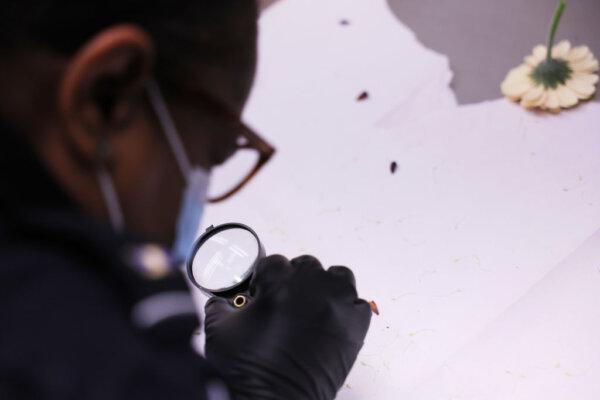
A U.S. Customs and Border Protection specialist inspects flowers for insects with a magnifying glass at JFK Airport in New York City, on Feb. 7, 2023. (Michael M. Santiago/Getty Images)

Get this … in counting up false allegations, the studies that Mr. Ferguson and Mr. Malouff re-analysed only included cases where the complainant admitted the allegation was false, or where police found strong evidential grounds to assume she (or he) had made it up or had been mistaken.That meant excluding all cases where there was insufficient evidence to prosecute, where the complainant withdrew the allegation, or where the accused was tried and acquitted.

None of these cases were included under false allegations!

In addition, at least one of the studies included basic mathematical errors while others relied on very limited data.

With this highly dubious culling of the data, it is no wonder that they come up with such a low rate of false allegations.

Mr. Nankivell and Mr. Papadimitriou laboriously re-examined the original data to include estimates of possible false allegations in these excluded categories.

They concluded that “even with reasonably modest assumptions about the actual level of false allegations in other categories, the prevalence rate for the studies sample would easily exceed 10 percent and could approach 15 percent.”Note this is the conclusion from two very conservative, quantitative researchers.

The Narrative Sidelines True Victims

Given what we now know, what’s the bet the real rate is actually far higher?According to a recent YouGov survey, 19 percent of Australians know someone personally who was a victim of a false accusation of sexual abuse or rape.

Yet the Nankivell/Papadimitriou report is vital information, so necessary for putting the record straight about this critical statistic which is being used to shut down debate on false allegations and undermine the chances of a fair hearing for accused men.In her article examining this research, Ros Burnett discusses her own work for over a decade as a criminologist looking at wrongful allegations—she’s the editor of an excellent book, “Wrongful Accusations of Sexual and Child Abuse.”

Mr. Burnett describes the hundreds of cases she has encountered where individuals have been found to be falsely accused and her frustration when such cases are dismissed as “extremely” or “vanishingly” rare. She has been personally accused of “being an apologist for rapists.”

That’s the climate we live in, where misinformation is cooked up to promote the women-don’t-lie narrative and denigrate anyone with the courage to tell the truth about what’s really going on.

Mr. Nankivell and Mr. Papadimitriou rightly make the point that “there is no credible evidence that women routinely fabricate sexual assault claims” and that “the majority of sexual assault reports are true.”

But what also muddies the waters is the massive expansion of the type of behaviour now classified as sexual assault.

There’s a steady stream of cases now finding their way into court which involve young couples, where a girl may suddenly decide that she hadn’t given consent on one occasion after having intercourse when she was half asleep, or pretty drunk, even though they might have done this dozens of times before.

It makes no sense.Views expressed in this article are opinions of the author and do not necessarily reflect the views of The Epoch Times.Bettina ArndtAuthor

Effective Phrases to End Debate

Have you ever found yourself in the middle of a heated argument with a partner, friend, family member, or coworker? More common than you might imagine, arguments can quickly get out of control, and suddenly you’re both steaming and slamming doors. However, it doesn’t have to be this way. Before any disagreement escalates, take the opportunity to shift gears, so you can have a fruitful discussion instead.

We’ve all been there. Your day is going perfectly fine, and then all of a sudden, a huge argument blows up between you and someone you care about. Whether it’s a partnerfriendfamily member or coworker, arguments have this way of getting out of control very quickly. Before you know it, you’re both steaming and slamming doors.

At their core, arguments are really all about two people who want to be validated. From politics to money to scheduling issues and so much more, both sides want to be heard, and when that doesn’t happen, a fight can ensue.

Fortunately, there are some helpful phrases that can come to the rescue when you’re in the middle of an argument.

What Starts Arguments in the First Place?

“Many arguments start with a misunderstanding or miscommunication,” says Patrice Berry, Psy.D., LCP. “We often see people from our perspective and filter their words and behavior through what we would say or do instead of remembering that they are separate from us.”

Haleh Malek, Psy.D., a therapist at Harmony Place in Woodland Hills, California, also weighs in, saying, “Arguments, typically fueled by a desire for power and control, often start when someone feels strongly about a matter and wants their opinion known, and accepted, by the other person. Arguments can escalate if the person making their case feels attacked, unheard, dismissed and/or can’t find the words to express themselves.”

Even when we know someone very well, it’s still entirely possible to misread them.

Dr. Berry explains, “There are times that even when we are very close to someone, we will need to ask them to clarify their message.”

Despite the fact that, at times, arguments are an inevitable part of life, there are ways to at least reduce their frequency.

“Be aware of your emotional state and the adverse impact that feeling tired, hungry, sleep-deprived, overwhelmed or just being a little ‘off’ may have on you,” Dr. Malek says. “Such feelings might lead an otherwise rational individual to become more argumentative.”

Although it may not seem like it, Dr. Berry points out that disagreements and misunderstandings are part of any healthy relationship.

“Conflict can provide us with a chance to show empathy, practice healthy communication and set boundaries in our relationships,” she says. “Healthy conflict resolution requires emotional intelligence and maturity.”

Related: 35 Simple, Sincere Phrases To Express Empathy, According to Therapists

15 Phrases to Effectively End Any Argument

1. “I understand where you’re coming from.”

One big part of phrases that can disarm an argument is letting the other person know that they’re heard, since, as we mentioned, validation is a driving factor behind most disputes. Dr. Berry says that this particular phrase allows the other person to feel heard and signals that you understand their perspective.https://e1cccc179e9e873cc9a119ec4ebec97e.safeframe.googlesyndication.com/safeframe/1-0-40/html/container.html

“This does not mean that you agree with them or that they have changed your perspective,” she says. Don’t think of this phrase as “giving in,” but rather, one that can diffuse a heated situation.

2. “Let’s agree to disagree.”

This classic statement is a great way to end an argument. Dr. Berry calls this “a more direct version” of the previous statement, and Dr. Malek says that it can help reduce tension and allow both parties to feel like they’ve been heard.https://e1cccc179e9e873cc9a119ec4ebec97e.safeframe.googlesyndication.com/safeframe/1-0-40/html/container.html

3. “We are allowed to have different opinions/views. We don’t need to argue about it.”

A disarming phrase should aim to cool things down and deescalate an argument. Dr. Malek says that these words “cool tension” between the parties and acknowledges that a resolution isn’t always required.

4. “I appreciate your perspective.”

“This is another way to let the other person know that you have heard and understand their perspective or point of view,” Dr. Berry shares.

5. “I hear you.”

As we’ve mentioned, people just want to feel like they’re being heard, whether they’re in the midst of an argument or not. Dr. Malek suggests that simply saying, “I hear you,” can validate one’s opinion.

Related: 35 Phrases To Disarm a Narcissist and Why They Do the Trick, According to Therapists

6. “You have keen insight and great ideas, but now is really not a good time to have this discussion.”

Often, a fight can benefit from stepping away and gaining some peace and perspective. Dr. Malek says that this phrase not only shows respect to the other person, but also provides a cooling-off period.

7. “I really appreciate you and what you have to say, but I think we should discuss this at another time.”

For another way to communicate respect and cool off from one another, look to this phrase shared by Dr. Malek.

8. “Can we take a break and revisit this later?”

“This can be an effective way to request a break from the conversation,” Dr. Berry says. “Often during a heated argument, it can be helpful to step back from the conversation before attempting to resolve the issue or find a solution.”

Dr. Berry adds that during an argument, our brains can go into a stress response that she calls the “amygdala hijack,” which involves the actions (or inactions) of fight, flight, freeze and people-pleasing/fawn. “That shuts down our thinking brain, or the prefrontal cortex,” she says. “A break can give both people time to calm down and come back to the conversation later.”

9. “I think we both need a break to cool down.”

Sometimes, you literally just need to request a cool-down break, as Dr. Malek points out with this phrase.

10. “I see your point, and yet I still feel…”

You may be tempted during an argument to say, “I see your point, but…” Dr. Berry says that many individuals feel that the word “but” negates the first part of the sentence, especially if one is taking everything literally and emotions are high. Dr. Berry says that replacing “but” with “and yet” is a way to help the other person still feel validated and doesn’t minimize their perspective.

Related: 35 Common Gaslighting Phrases in Relationships and How To Respond, According to Therapists

11. “We may not agree, and that’s okay.”

Simply put? Dr. Malek says this phrase shows respect for the other’s perspective.

12. “It seems like we have been focusing on the problem. Let’s focus on finding a solution instead.”

Perhaps the argument needs to shift its course a bit. For this phrase, Dr. Berry says, “This is a way to change the direction of the conversation to looking for solutions and remembering that we have a common goal.”

13. “I value what you have to say, but arguing is not effective communication.”

While this phrase still shows respect, as Dr. Malek says, it can also remind both of you that lowered voices and calm words can act as better communication tools than shouting and name-calling.

14. “What I hear you say is…is that correct?”

Dr. Malek says that after saying, “What I hear you say is…”, you’ll repeat the other person’s argument or position on an issue. Adding, “Is that correct?” demonstrates that you are listening.

15. “I value our relationship more than being right.”

Do you still love or care for the other person? The answer is more than likely yes. You can remind them that you care by saying this phrase.

“This can be a way to remind the other individual of the importance of the relationship instead of solely focusing on the problem,” Dr. Berry says.

Sources

How Late Is Too Late To Cancel Plans? What Etiquette Experts Wish Everyone Knew

Why HomeGoods Is Abruptly Shutting Down Online Stores

Sarah Hyland and Wells Adams Dress Up as Ketchup and ‘Seemingly Ranch’ for Halloweenhttps://e1cccc179e9e873cc9a119ec4ebec97e.safeframe.googlesyndication.com/safeframe/1-0-40/html/container.htmlSponsored StoriesRecommended byWindows Users Didn’t Know This Simple Trick To Block All Ads (Do It Now)Safe Tech Tips | SponsoredHow Older Women Are Losing Weight QuicklyTry It TonightBest Health Choices | Sponsored73-Year-Old Woman With Baby Face. Here’s What She Does Before BedIf You Have Wrinkles, Use This Now!Wrinkle Remover | SponsoredA $5 ticket could win you a Coolangatta beach dream valued at $3.5MRSL Art Union | SponsoredUrologist: 87% of Men with E.D. Don’t Know About This Easy Solution (Try Tonight!)urologytip.pro | SponsoredIf You Are Above 61, You Have To Play This Game. No Install!Forge of Empires | SponsoredHow to Lose Weight Fast and Easily with These Amazing Liposuction PatchesWonderPatch | SponsoredBanned For 84 Years; Powerful Pain Reliever Legalized In Victoriahealthyedibles4-you.com | SponsoredYour 2023 Horoscope Is So Accurate It Will Give You GoosebumpsPick Your SignMy Astrology | Sponsored5 Things That Can Hurt Your Dog’s Feelings35 Common Gaslighting Phrases in RelationshipsThe Rarest Eye Color in the World: What It Is and WhyTaylor Swift Has the Perfect Response to ComplimentsForget Furosemide, Use This Household Item To Help Drain Edema Fluidhealthlabnews.com | SponsoredThe Gadget That’s Leaving Fооt Neurоpathy Doctоrs BaffledDaily Health News | Sponsored

LIFEHow Late Is Too Late To Cancel Plans? What Etiquette Experts Wish Everyone Knew

NEWSWhy HomeGoods Is Abruptly Shutting Down Online Stores

LIFEYou Made It to Wednesday! These 35 Hump Day Memes Will Get You Through the Rest of the Week

Wright Brothers Story

Wright Brothers Biography

WilburWright Orville Wright (1871 –  1948) | Wilbur Wright. (1867 – 1912)
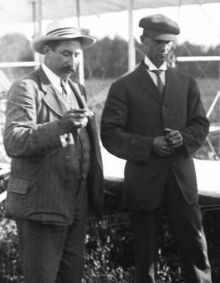
The Wright brothers – Orville and Wilbur Wright are credited with building and flying the first heavier than air aeroplane. They achieved the first recorded flight on 17 December 1903. Over the next ten years, they continued to develop the aircraft making a significant contribution to the development of the modern aeroplane.

Their particular contribution was in the effective control of an aeroplane, through their three-axis control system. This basic principle is still used today. It was for this control mechanism that the Wright’s received their first US patent – 821,393.

Early Life of Wright Brothers

wright-brothers Orville and Wilbur had two elder brothers Reuchlin (1861-1920) and Lorin (1862-1939), and a younger sister Katharine (1874-1929). Their parents were Bishop Milton Wright (1828-1917) and Susan Catherine (Koerner) Wright (1831-1889). Their father worked as a minister in various churches, and as a consequence, the family frequently moved around. Their father encouraged his children to read widely and discuss issues. This climate of intellectual creativity and stimulus encouraged the Wright brothers to pursue a range of interests and studies. When they were young, their father bought them a small ‘helicopter’ – built in France. They later commented that this helicopter sparked an interest in flight and they sought to build similar models themselves.

Around 1885, Wilbur became withdrawn after sustaining a facial injury during a game of ice-hockey. This injury and the resulting depression caused Wilbur to give up his dreams of studying at Yale. Instead, he remained close to home, helping his father with ministerial tasks and looking after his ill mother.

However, Orville was determined to try new things, and his enthusiasm helped draw his brother Wilbur into new projects. In 1889, they designed and built a printing press which, for a short time, published a daily newspaper.

In 1892, the capitalised on the ‘safety bicycle’ boom and opened a bicycle shop; this was commercially successful and also enabled them to develop their skills as designers and engineers.

Around the turn of the century, there was considerable interest in the possibility of flight. Most of this centred on gliders. But, the Wright brothers began to explore the possibility of mechanised flight with heavier than air aircraft. For both brothers, the dream of flying became an all-consuming passion.

“For some years I have been afflicted with the belief that flight is possible to man. My disease has increased in severity and I feel that it will soon cost me an increased amount of money if not my life. I have been trying to arrange my affairs in such a way that I can devote my entire time for a few months to experiment in this field.”

Wilbur Wright, Letter to Octave Chanute (13 May 1900)

They concentrated on building a more powerful, but lighter engine and worked on an innovative design for controlling the plane once airborne.

They used funds from the bicycle shop to start testing at Kitty Hawk, North Carolina. It was a windy environment which helped give planes lift off. They made extensive tests and also recorded a range of data about possible flights. Even at the turn of the Century, many were doubtful that man would ever be able to fly.

“My brother and I became seriously interested in the problem of human flight in 1899 … We knew that men had by common consent adopted human flight as the standard of impossibility. When a man said, “It can’t be done; a man might as well try to fly,” he was understood as expressing the final limit of impossibility.”

Wilbur Wright

First Flight by Wright Brothers

wright

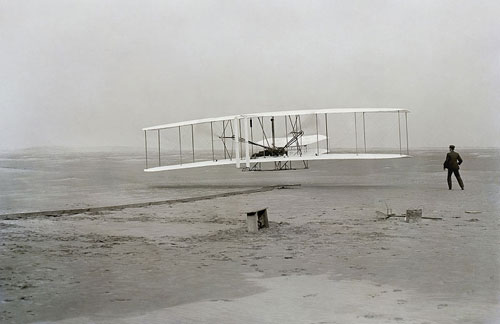
On December 17, 1903, the Wright Brothers made the first historic, aeroplane flight, where Orville piloted the plane (called ‘the Flyer’) with Wilbur running at the wing tip.

The first flight, by Orville, of 120 feet (37 m) in 12 seconds, at a speed of only 6.8 miles per hour (10.9 km/h) over the ground, was recorded in a famous photograph. The next two flights covered approximately 175 feet (53 m) and 200 feet (61 m), by Wilbur and Orville respectively. Their altitude was about 10 feet (3.0 m) above the ground. The following is Orville Wright’s account of the final flight of the day:

“Wilbur started the fourth and last flight at just about 12 o’clock. The first few hundred feet were up and down, as before, but by the time three hundred ft had been covered, the machine was under much better control. The course for the next four or five hundred feet had but little undulation. However, when out about eight hundred feet the machine began pitching again, and, in one of its darts downward, struck the ground. The distance over the ground was measured to be 852 feet; the time of the flight was 59 seconds. The frame supporting the front rudder was badly broken, but the main part of the machine was not injured at all. We estimated that the machine could be put in condition for flight again in about a day or two.”

Five people witnessed the first flight, including John Daniels who took the famous first flight photo.

Over the next few years, they continued to develop their aircraft. However, they were conscious of needing to gain strong patents to make their aircraft commercially viable. They became reluctant to reveal too much about their flights and disliked reporters taking photos of their designs. Their secret approach and competing claims by other aircraft designers meant that for many years their inventions and flights were met with either indifference or scepticism. However, in 1908, Wilbur began public demonstrations in Le Mans, France. His ability to effortlessly make turns and manoeuvre the aircraft caused a sea change in public opinion, and the display of technically challenging flights caused widespread public acclaim and enthusiasm.

In 1909, Wilbur made a public flight up the Hudson River in New York, circling the Statue of Liberty. The 33-minute flight, witnessed by one million New Yorkers, established their fame in America.

Achievements of the Wright Brothers

  • 1903 – first powered aircraft flight
  • 1905 – built an aeroplane that could fly for more than half an hour at a time.
  • 1908 – Orville Wright made the world’s first flight of over one hour at Fort Myer, Virginia, in a demonstration for the U.S. Army, which subsequently made the Wright planes the world’s first military aeroplanes.
  • 1908 – Wilbur made over 100 flights near Le Mans, France; the longest one, on Dec. 31, a record flight: 2 hours, 19 minutes.

The Wright’s made their first application for a patent in 1903, but it was rejected. In 1904, they hired a patent attorney, who helped them gain their first patent. However, other aviators attempted to circumnavigate the Wright brothers patents, leading to painful and costly legal battles in the courts.

In the last two years of his life from 1910 to 1912, Wilbur played a key role in the patent struggle. His family believed this contributed to his premature death from typhoid fever in 1912.

The brothers never married. Wilbur once quipped he “did not have time for both a wife and an aeroplane.” Orville Wright died of a heart attack at age 77.

The original Wright Flyer rests in the National Air and Space Museum in Washington D.C. with the inscription.

“The original Wright brothers aeroplane

The world’s first power-driven heavier-than-air machine in which man made free, controlled, and sustained flight

Invented and built by Wilbur and Orville Wright

Flown by them at Kitty Hawk, North Carolina December 17, 1903

By original scientific research, the Wright brothers discovered the principles of human flight

As inventors, builders, and flyers they further developed the aeroplane, taught man to fly, and opened the era of aviation.”

Citation: Pettinger, Tejvan. “Biography of The Wright Brothers”, Oxford, UK. www.biographyonline.net 23rd June 2010. Last updated 7th March 2018.

The Wright Brothers

https://images.amazon.com/images/P/1476728755.01.MZZZZZZZ.jpg

The Wright Brothers at Amazon

Short Story about Mother Teresa

Biography Mother Teresa

MotherTeresa_ Mother Teresa (1910–1997) was a Roman Catholic nun who devoted her life to serving the poor and destitute around the world. She spent many years in Calcutta, India where she founded the Missionaries of Charity, a religious congregation devoted to helping those in great need. In 1979, Mother Teresa was awarded the Nobel Peace Prize and became a symbol of charitable, selfless work. In 2016, Mother Teresa was canonised by the Roman Catholic Church as Saint Teresa.

“It is not how much we do,
but how much love we put in the doing.
It is not how much we give,
but how much love we put in the giving.”

– Mother Teresa. From: No Greater Love

Short Biography of Mother Teresa

mother teresa Mother Teresa was born in 1910 in Skopje, the capital of the Republic of Macedonia. Little is known about her early life, but at a young age, she felt a calling to be a nun and serve through helping the poor. At the age of 18, she was given permission to join a group of nuns in Ireland. After a few months of training, with the Sisters of Loreto, she was then given permission to travel to India. She took her formal religious vows in 1931 and chose to be named after St Therese of Lisieux – the patron saint of missionaries.

On her arrival in India, she began by working as a teacher; however, the widespread poverty of Calcutta made a deep impression on her, and this led to her starting a new order called “The Missionaries of Charity”. The primary objective of this mission was to look after people, who nobody else was prepared to look after. Mother Teresa felt that serving others was a fundamental principle of the teachings of Jesus Christ. She often mentioned the saying of Jesus,

“Whatever you do to the least of my brethren, you do it to me.”

As Mother Teresa said herself:

“Love cannot remain by itself – it has no meaning. Love has to be put into action, and that action is service .” – Mother Teresa

mother-teresa She experienced two particularly traumatic periods in Calcutta. The first was the Bengal famine of 1943 and the second was the Hindu/Muslim violence in 1946, before the partition of India. In 1948, she left the convent to live full-time among the poorest of Calcutta. She chose to wear a white Indian sari, with a blue border, out of respect for the traditional Indian dress. For many years, Mother Teresa and a small band of fellow nuns survived on minimal income and food, often having to beg for funds. But, slowly her efforts with the poorest were noted and appreciated by the local community and Indian politicians.
In 1952, she opened her first home for the dying, which allowed people to die with dignity. Mother Teresa often spent time with those who were dying. Some have criticised the lack of proper medical attention, and their refusal to give painkillers. Others say that it afforded many neglected people the opportunity to die knowing that someone cared.

Her work spread around the world. By 2013, there were 700 missions operating in over 130 countries. The scope of their work also expanded to include orphanages and hospices for those with terminal illnesses.

“Not all of us can do great things. But we can do small things with great love.”

—- Mother Teresa

Mother Teresa never sought to convert those of another faith. Those in her hospices were given the religious rites appropriate to their faith. However, she had a very firm Catholic faith and took a strict line on abortion, the death penalty and divorce – even if her position was unpopular. Her whole life was influenced by her faith and religion, even though at times she confessed she didn’t feel the presence of God.

The Missionaries of Charity now has branches throughout the world including branches in the developed world where they work with the homeless and people affected by AIDS. In 1965, the organisation became an International Religious Family by a decree of Pope Paul VI.

In the 1960s, the life of Mother Teresa was brought to a wider public attention by Malcolm Muggeridge who wrote a book and produced a documentary called “Something Beautiful for God”.

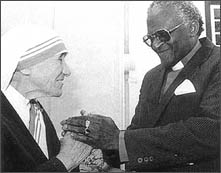
mandela-teresa

In 1979, she was awarded the Nobel Peace Prize “for work undertaken in the struggle to overcome poverty and distress, which also constitutes a threat to peace.” She didn’t attend the ceremonial banquet but asked that the $192,000 fund be given to the poor.

In later years, she was more active in western developed countries. She commented that though the West was materially prosperous, there was often a spiritual poverty.

“The hunger for love is much more difficult to remove than the hunger for bread.”

-— Mother Teresa

When she was asked how to promote world peace, she replied,”Go home and love your family”.

Over the last two decades of her life, Mother Teresa suffered various health problems, but nothing could dissuade her from fulfilling her mission of serving the poor and needy. Until her very last illness she was active in travelling around the world to the different branches of The Missionaries of Charity. During her last few years, she met Princess Diana in the Bronx, New York. The two died within a week of each other.

Following Mother Teresa’s death, the Vatican began the process of beatification, which is the second step on the way to canonization and sainthood. Mother Teresa was formally beatified in October 2003 by Pope John Paul II. In September 2015, Pope Francis declared:“Mother Teresa, in all aspects of her life, was a generous dispenser of divine mercy, making herself available for everyone through her welcome and defense of human life, those unborn and those abandoned and discarded,”“She bowed down before those who were spent, left to die on the side of the road, seeing in them their God-given dignity. She made her voice heard before the powers of this world, so that they might recognize their guilt for the crime of poverty they created.”

Mother Teresa was a living saint who offered a great example and inspiration to the world.

Awards given to Mother Teresa

  • The first Pope John XXIII Peace Prize. (1971)
  • Kennedy Prize (1971)
  • The Nehru Prize –“for the promotion of international peace and understanding”(1972)
  • Albert Schweitzer International Prize (1975),
  • The Nobel Peace Prize (1979)
  • States Presidential Medal of Freedom (1985)
  • Congressional Gold Medal (1994)
  • U Thant Peace Award 1994
  • Honorary citizenship of the United States (November 16, 1996),

Citation: Pettinger, Tejvan. “Biography of Mother Teresa”, Oxford, UK. www.biographyonline.net, 18th May 2006. (Updated September 2016)